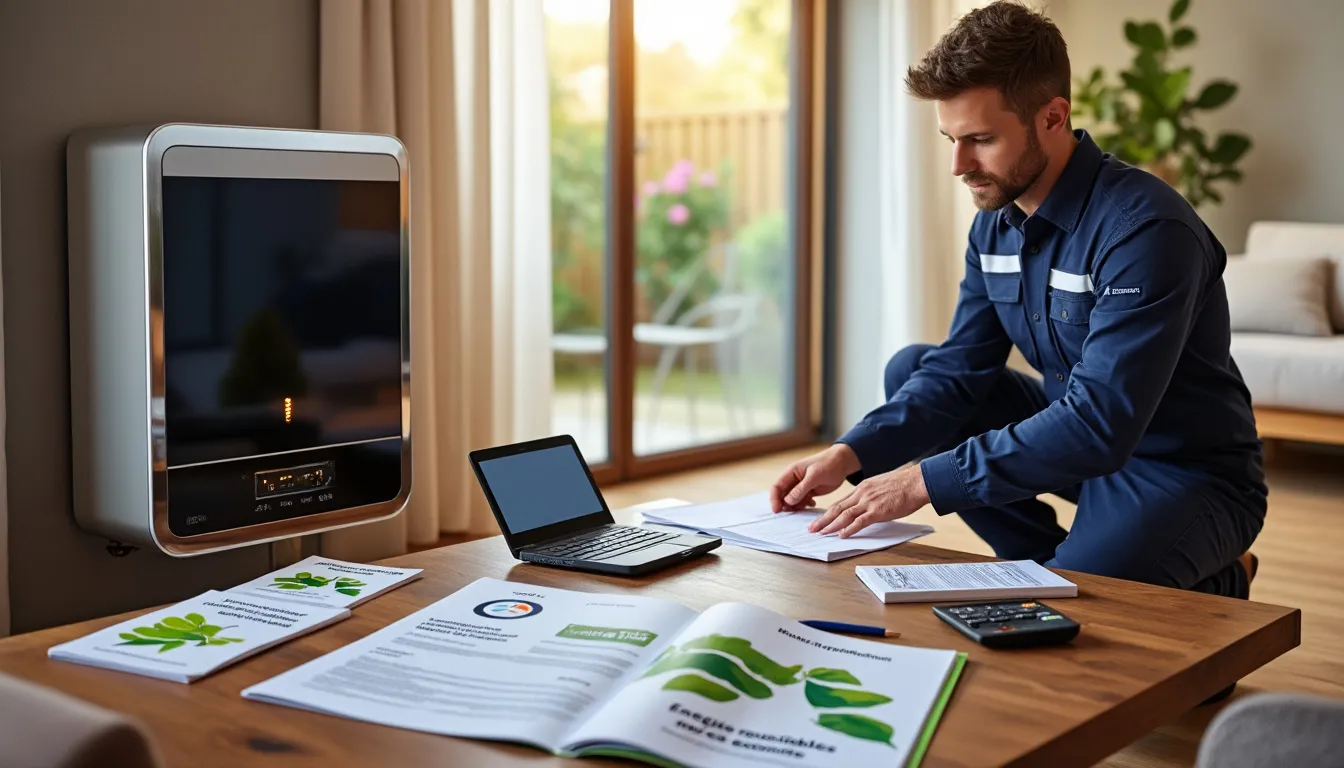
What financial aid is available to replace an old condensing boiler?
5 min read
In a world where environmental preservation is becoming a priority, the question of energy efficiency is at the heart of households' concerns. When considering replacing an old condensing boiler, the choice of a sustainable and economical heating system is crucial. The energy transition is supported by the state, which offers various financial aids to encourage households to modernize their equipment. This article explores the different subsidies and aids available to facilitate the transition to more environmentally friendly heating solutions, while highlighting the importance of technological choices for a sustainable future.
The necessity of replacing an old boiler: environmental and economic issues
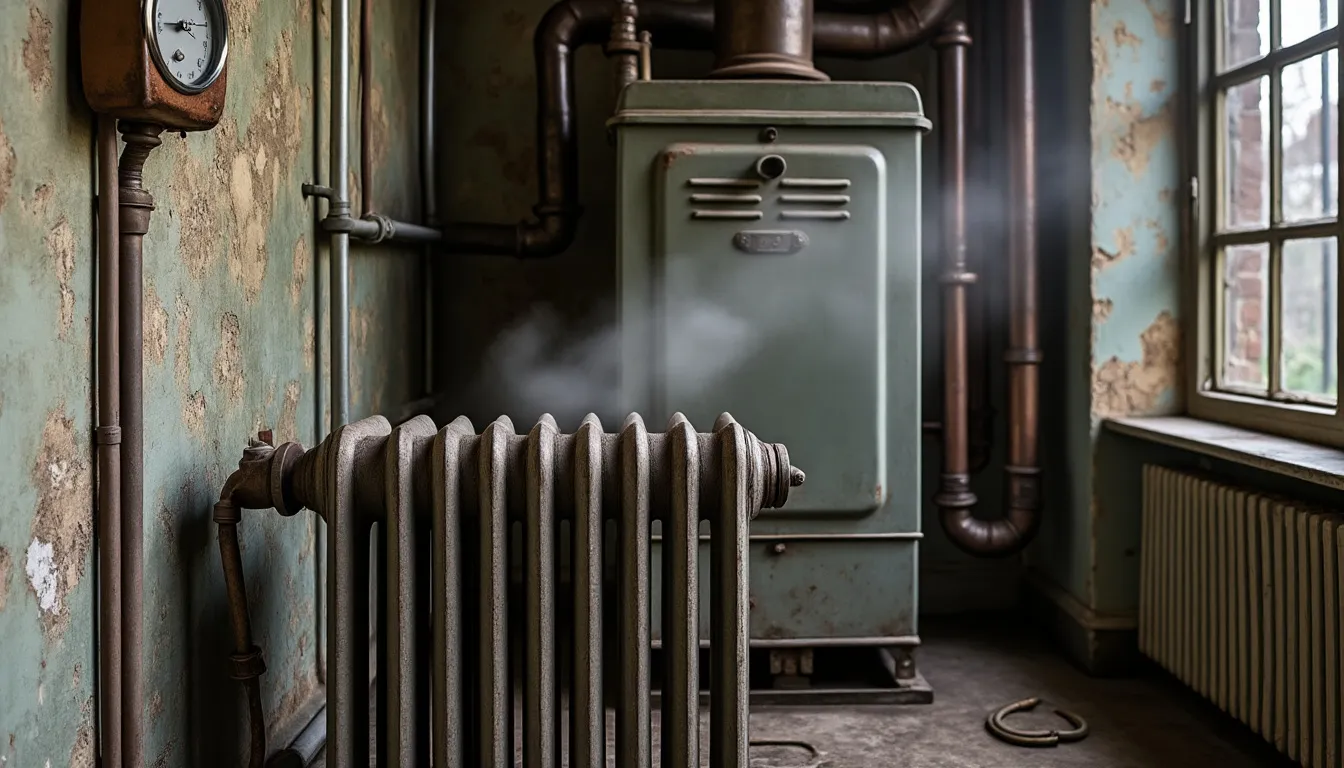
Oil boilers, for example, represent a very polluting energy solution, emitting a significant amount of greenhouse gases. Indeed, the ban on installing new oil boilers since 2022 aims to combat climate change and reduce dependence on fossil fuels. This observation is pushing many homeowners to consider replacing their old equipment with more ecological installations.
It is therefore essential to know the viable alternatives, such as condensing gas boilers, wood boilers, and heat pumps, which offer better energy yields and less impact on our environment. Here are some reasons why it makes sense to change your boiler:
Reduction of energy bills: A modern heating system can reduce your heating costs by up to 20%.
Reduced environmental impact: Less CO2 emitted and better energy efficiency contribute to the preservation of our planet.
Increase in property value: A high energy performance device increases the value of your property.
The financial aids available for replacing old boilers
The government has set up several support initiatives aimed at assisting individuals in their energy renovation efforts. These aids aim to lighten the cost of work and encourage the adoption of more sustainable systems. Here is an overview of the main financial aids:
Aid | Description | Eligibility Conditions |
|---|---|---|
MaPrimeRénov | Financial aid granted by the state to improve the energy performance of housing. | For all homeowners, subject to income conditions. |
Zero-interest eco-loan | Interest-free loan intended to finance energy renovation work. | Available to all owners of a primary residence. |
ANAH Grant | Assistance from the "Living Better" program for low-income households improving energy performance. | Aimed at low-income or very low-income households. |
Energy bonus | Assistance paid by energy suppliers to consumers making energy savings. | Eligibility depends on consumption criteria and work completed. |
Local aids from communities | Aids offered by certain municipalities to stimulate energy renovation. | Varies according to each community and required conditions. |
MaPrimeRénov: an aid at the heart of the energy transition
MaPrimeRénov, launched on January 1, 2020, is probably one of the most well-known aids. It follows the CITE (Tax Credit for Energy Transition) and aims to support all households based on their resources. It is designed to compensate part of the work carried out to improve the energy efficiency of your home.
This aid has been established to:
Facilitate energy renovation by providing appropriate financial support.
Encourage the use of high energy performance equipment.
Move towards a more ecological home.
The amounts awarded vary depending on income and the work envisaged. For low-income households, the aid can reach €1,200, while for very low-income households, it can go up to €2,000. This is an excellent way to reduce the cost of a new installation while complying with environmental standards.
Eligibility conditions to benefit from MaPrimeRénov
To be eligible for MaPrimeRénov, you must meet certain conditions:
Be the owner of a property built for more than two years.
Renovate your primary residence.
Have the work carried out by a professional holding the RGE (Recognized Guarantee of the Environment) certification.
Make sure to inform yourself about these points before embarking on your renovation project.
The Zero-interest eco-loan and other financing solutions
Besides MaPrimeRénov, the Zero-interest eco-loan (Éco-PTZ) is another option to consider. This scheme allows any homeowner to finance their renovation work without interest. This proves particularly advantageous, especially for costly projects like replacing boilers.
The main advantage of the Éco-PTZ is its simplicity: no application fees, repayment over 15 years, and access to funds of up to €30,000 depending on the type of work. Here are some key points to remember:
No interest on the loan, making it affordable.
Accessible to all homeowners, regardless of financial situation.
Can be combined with other aids like MaPrimeRénov.
It is crucial to evaluate all financing options and calculate the potential savings on your energy bills to determine the return on investment.
Cumulative financial aids: optimize your investment
An effective strategy for energy renovation is to combine several aids. Understanding the terms of each aid allows you to optimize the budget allocated to this work. Here are some possible combinations:
Combine MaPrimeRénov with the Éco-PTZ for better long-term financing.
ANAH grant for low-income households, accompanied by the energy bonus from suppliers.
Potential local aids that can be added to national aids.
Don't forget to check your eligibility for each type of support, as this could significantly reduce your remaining costs after all the work is done.
FAQ
What is MaPrimeRénov and who can benefit from it?
MaPrimeRénov is a financial aid from the state aimed at supporting the energy renovation of housing. All homeowners can benefit from it, subject to income conditions, to finance improvement work.
What types of boilers are eligible for aids?
Can multiple aids be combined for my renovation project?
Yes, multiple aids can be combined, such as MaPrimeRénov, the Éco-PTZ, and local subsidies, which allows you to optimize your project budget.
How do I prove my income to benefit from the aids?
To benefit from the aids, you will need to provide proof of your income, such as tax returns or pay slips, depending on the conditions of each aid.
Which professionals should be involved in my work?
The work must be carried out by RGE-certified professionals (Recognized Guarantee of the Environment) for you to benefit from the proposed financial aids.