
Wood heating: no worries, it will not be prohibited
9 min read
Since the beginning of the year, a persistent rumor has circulated about a possible ban on wood heating within the European Union by 2027. This concern, widely relayed by various media, originates from a draft law by the European Commission aimed at strengthening the Ecodesign standard. Despite the fears, this ban will not materialize, at least not in the immediate future. Let’s explore together the ins and outs of this situation.
While wood heating remains a popular solution for nearly a quarter of French households, discussions about its regulatory future raise many questions. Between energy performance and environmental impact, this heating method finds itself at the heart of a complex debate between efficiency, tradition, and air quality preservation.
Origin of the rumors about a ban on wood heating
The recent speculation about a potential ban on wood heating in 2027 stems from a misinterpretation of a draft law published by the European Commission in January 2025. This draft primarily aimed to strengthen the requirements of the Ecodesign standard, which governs the marketing of wood heating appliances within the EU.
Unfortunately, this initiative has been misunderstood by some media, leading to alarmist headlines. It is essential to clarify that this strengthened standard does not aim to prohibit the use of existing appliances, but rather to regulate their marketing in Europe by imposing stricter criteria regarding energy performance and pollutant emissions.
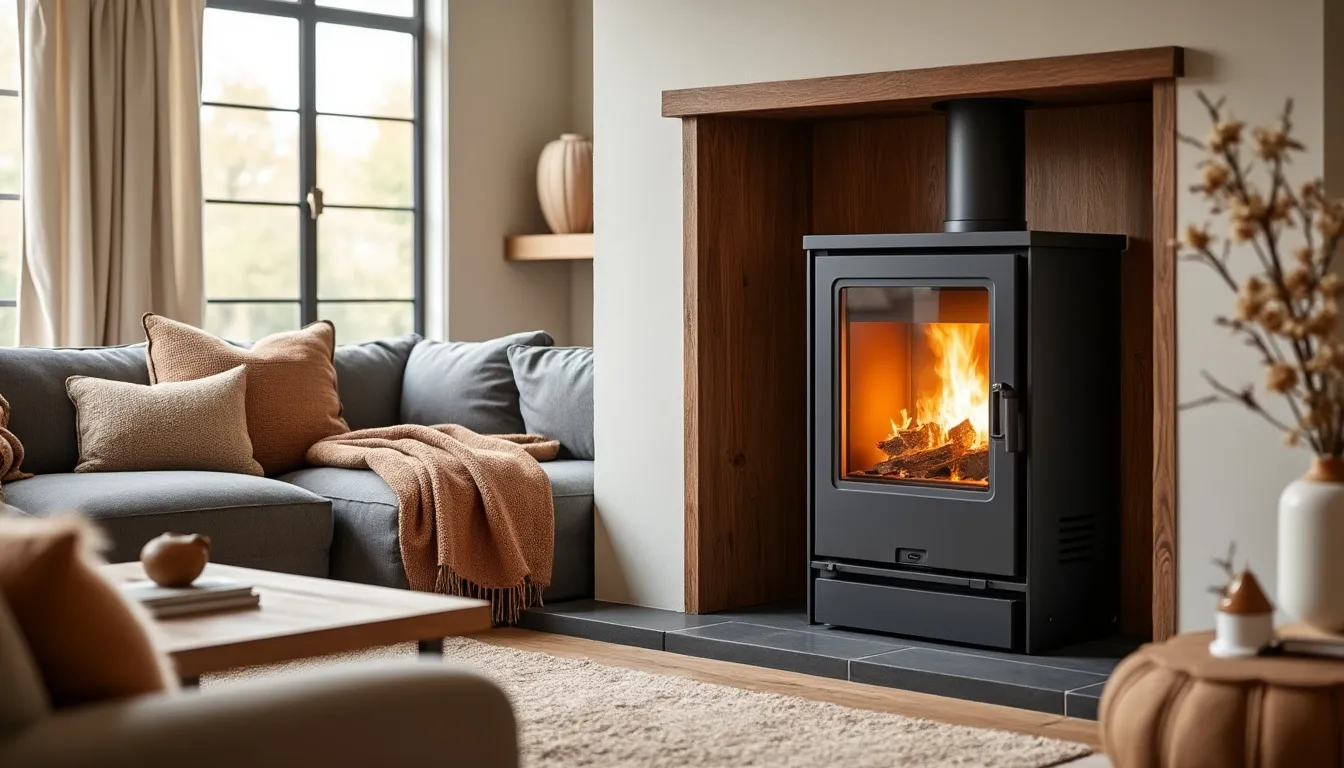
Understanding the Ecodesign standard
The Ecodesign standard is a set of European directives aimed at improving energy efficiency and reducing pollutant emissions from household and industrial appliances. For wood heating appliances, this standard stipulates rigorous criteria concerning not only energy consumption but also emissions of pollutants such as carbon monoxide, nitrogen oxides, volatile organic compounds, and fine particles.
By tightening these criteria, the European Commission aims to reduce the environmental impact of wood heating devices while encouraging innovation and the adoption of cleaner technologies. Brands such as Jøtul and Invicta have already begun adapting their ranges to meet these new requirements, thus ensuring future compatibility with the European market.
Increased energy efficiency
Reduction of pollutant emissions
Encouragement of technological innovation
Mandatory compliance for sales in the EU
Criteria | Current Requirement | New Requirement |
|---|---|---|
Carbon monoxide (CO) | 50 mg/m³ | 30 mg/m³ |
Nitrogen oxides (NOx) | 200 mg/m³ | 150 mg/m³ |
Fine particles (PM2.5) | 25 mg/m³ | 15 mg/m³ |
These adjustments aim to align the performance of wood heating appliances with current ecological standards, thus ensuring a significant reduction in their environmental impact.
Environmental impact of wood heating
Although wood heating is often regarded as a renewable energy source, its use can lead to harmful consequences for air quality. In 2021, the Hauts-de-France and Normandy regions recorded pollution peaks where nearly a quarter of PM10 concentrations were attributable to biomass combustion.

Fine particles and their effect on health
Fine particles (PM10, PM2.5) emitted by wood heating appliances are particularly concerning. These particles can penetrate deeply into the respiratory tract, causing various health problems, ranging from mild irritations to more serious conditions such as asthma or cardiovascular diseases.
According to the Ademe, a well-performing appliance can emit up to 15 times fewer particles than an old heating appliance or an open fire. This reduction is crucial for improving air quality and decreasing health risks associated with pollution.
Improvement of air quality
Reduction of respiratory illnesses
Decrease in carbon footprint
Year | PM10 (µg/m³) | PM2.5 (µg/m³) |
|---|---|---|
2020 | 40 | 25 |
2025 | 30 | 15 |
2030 | 20 | 10 |
These figures show that with the adoption of cleaner technologies and adherence to the strengthened Ecodesign standards, significant improvements in air quality are achievable.
Reactions from manufacturers and legislators
The initial draft law has sparked a strong reaction among wood heating appliance manufacturers and some members of the European Parliament. Many feared that the new requirements would make it impossible to market their products, thus threatening their business.
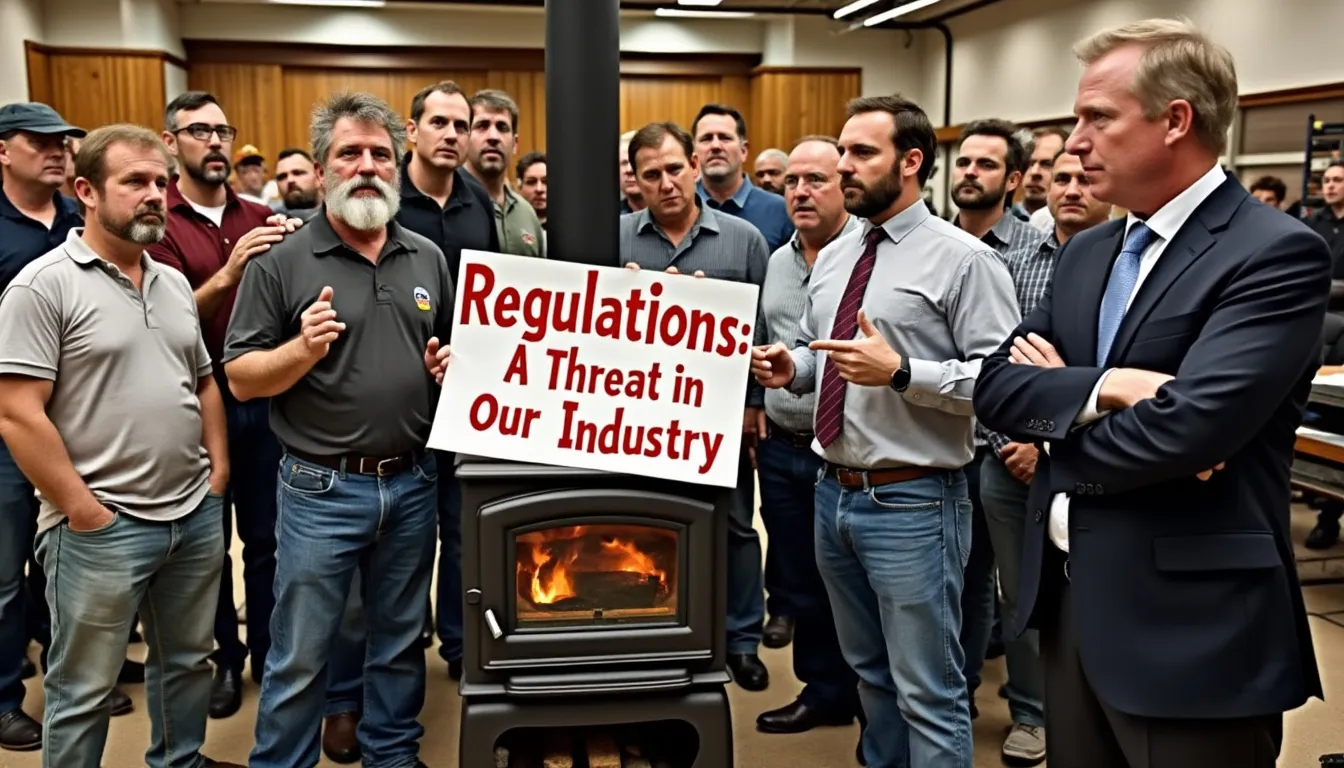
Manufacturers' adaptation
Renowned companies such as Dovre, Haas+Sohn, and Edilkamin have expressed their concerns about the feasibility of the new standards. Jérémy Simon, deputy general delegate of Ser, emphasized that "this text imposed, in any case, performance thresholds that would have made it very difficult to introduce wood heating appliances to the European market." In response, these manufacturers are committed to innovating and improving their products to comply with the new requirements, thus ensuring the continuity of their offerings in the European market.
Increased production costs
Research and development of new technologies
Collaboration with regulators to adjust standards
Legislators' position
European legislators, while supporting environmental objectives, have recognized the need to find a balance between strict regulation and economic viability for manufacturers. The European Commission has since postponed the presentation of the draft law, citing the need for more thorough work and wider consultation with all stakeholders involved.
This approach aims to refine the criteria while remaining ambitious in ecological terms, allowing manufacturers to gradually adapt without decimating the entire wood heating appliance market.
Actor | Reaction | Planned Action |
|---|---|---|
European Commission | Need for thorough work | Postponement of project presentation |
Manufacturers |
| Innovation and adaptation of products |
MEPs | Economic concern | Search for balanced solutions |
This collaboration between different stakeholders demonstrates a collective willingness to maintain the wood heating sector while addressing ecological imperatives.
The postponement and future perspectives
In response to mixed reactions, the European Commission decided to delay the presentation of the draft law originally scheduled for February 12, 2025. This decision opened the discussion to broader consultation, including feedback from manufacturers and other stakeholders.
A remodeled draft law
The new version of the draft law should integrate suggestions from all stakeholders, aiming to strengthen Ecodesign standards without making their application unmanageable. The goal is to achieve regulations that encourage technological innovation while ensuring high environmental standards.
Expanded consultation with manufacturers
Integration of cutting-edge technologies
Flexibility in adopting standards timelines
Entry into force in 2027
Despite this postponement, the entry into force of the strengthened standard is still scheduled for January 1, 2027. This deadline allows manufacturers to adjust their products and gradually comply with the new requirements. It remains to be seen how this adaptation will influence the French and European wood heating market.
Brands such as Mendip and Stovax are already beginning to invest in cleaner technologies, thus anticipating future regulations and responding to a growing demand for more ecological solutions.
Year | Regulatory Deadline | Required Action |
|---|---|---|
2025 | Postponement of the draft law | Broader consultation |
2026 | Finalization of the remodeled draft | Validation of new standards |
2027 | Entry into force of reinforced Ecodesign standards | Compliance of appliances on the market |
With these adjustments, the European Union hopes to reconcile environmental objectives with economic viability, without sacrificing the utility and efficiency of wood heating.
Impact of French policies on wood heating
Alongside European discussions, the French government has taken significant measures to regulate wood heating, notably by reducing financial aid for replacing old appliances. Since April 2024, the amounts of MaPrimeRénov’ have decreased by 30%, and a further 30% reduction is scheduled for January 2025 as part of the "decarbonization" pathway.
Reduction of financial aid
The successive decreases in subsidies make acquiring new wood heating appliances less accessible for many households. This reduction in aid could slow the replacement of old devices, often very polluting, with newer, less emitting models. Thus, even though the new Ecodesign standards encourage the purchase of cleaner stoves, the reductions in subsidies significantly limit this transition.
Impact on low-income households
Slowing down equipment renewal
Difficulties for manufacturers to sell their new models
Alternative solutions and local aid
Fortunately, MaPrimeRénov’ is not the only aid available. The air-wood fund, accessible in certain municipalities, offers additional subsidies for replacing old wood heating appliances. These aids specifically target regions facing winter pollution peaks, thus promoting a faster transition to more environmentally friendly solutions.
Local initiatives continue to support households in choosing and installing cleaner heating systems, thus contributing to the overall reduction of pollutant emissions.
Type of aid | Amount | Eligibility criteria |
|---|---|---|
MaPrimeRénov' | Variable depending on projects | Conditions related to income and types of work |
Air-wood fund | Up to €2000 | Local availability and critical pollution situation |
Local aids | Varies by municipality | Specific criteria defined by each region |
These alternative solutions provide ongoing financial support for those looking to modernize their heating systems, thus ensuring continuity in decarbonization efforts.
Perspectives on the wood heating market in France
The future of wood heating in France seems to oscillate between stricter regulations and technological innovation. Manufacturers must now be more responsive and creative to meet the new standards while remaining competitive in a rapidly changing market.
Innovation and adaptation of manufacturers
Leading companies such as Austroflamm and Norwfik are investing heavily in research and development to design more efficient and less polluting devices. These initiatives are essential for complying with the new Ecodesign standards and for responding to growing consumer demand for more ecological solutions.
Development of high-efficiency stoves
Integration of advanced filtration technologies
Collaboration with technology partners such as Godin
Dynamism of the French market
Despite the challenges, the wood heating market in France remains dynamic. The preference for local and renewable energy, combined with a desire to reduce pollutant emissions, supports demand. Brands such as Jøtul and Dovre continue to innovate, offering products tailored to contemporary needs while adhering to ecological standards.
Moreover, heightened awareness of environmental issues drives more consumers to opt for greener heating solutions, thus ensuring the sector's sustainability.
Brand | Key Innovation | Environmental Impact |
|---|---|---|
Jøtul | Optimized combustion technology | Reduction of particle emissions |
Dovre | Integrated filtration systems | Improvement of air quality |
Godin | Multi-functional stoves | High energy efficiency |
These innovations not only meet regulatory requirements but also position wood heating as a viable and environmentally friendly option within the French energy landscape.
Financial aid for wood heating
In light of the need to modernize heating systems, financial aid plays a crucial role. Despite the reduction in national subsidies, complementary mechanisms remain available to support households in their energy renovation projects.
MaPrimeRénov’ and its developments
MaPrimeRénov’ remains the main public aid for energy renovation in France. However, with a gradual decrease in allocated amounts – 30% in April 2024 and a further reduction expected in January 2025 – financial accessibility to new wood heating appliances becomes more complex for individuals.
Strict eligibility conditions
Variable amounts depending on projects
Priority given to the most energy-efficient solutions
Other aid mechanisms and local subsidies
Despite national reductions, households can still benefit from other forms of aid. The air-wood fund, for instance, offers specific subsidies in regions heavily affected by winter pollution. Moreover, many local communities provide complementary aids to encourage replacing old appliances with more efficient models.
These mechanisms help to supplement reductions from MaPrimeRénov’ and maintain financial support for energy renovation projects, thereby facilitating the transition to cleaner heating systems.
Type of aid | Maximum amount | Criteria |
|---|---|---|
Air-wood fund | €2000 | Locations with pollution peaks |
Local aids | Variable depending on regions | Defined by each municipality |
MaPrimeRénov' | Variable | Income and types of work |
By combining these different aids, households can find solutions tailored to their needs and budget, even with the reduction of national subsidies.
FAQ
Will wood heating be banned in 2027 throughout the European Union?
No, there is no general ban on wood heating in 2027. The reinforced Ecodesign standard aims to improve efficiency and reduce pollutant emissions from wood heating appliances, without prohibiting their use.
What are the criteria of the new Ecodesign standards for wood heating appliances?
The new Ecodesign standards impose strict criteria in terms of energy performance and reductions of pollutant emissions such as carbon monoxide, nitrogen oxides, volatile organic compounds, and fine particles.
How are manufacturers responding to the new standards?
Manufacturers, including Jøtul and Invicta, are investing in research and development to adapt their products to the new requirements by improving energy efficiency and reducing pollutant emissions.
What financial aids are available for replacing an old wood heating appliance?
In addition to MaPrimeRénov’, the air-wood fund and various local aids are available to financially support the replacement of old appliances with cleaner and more efficient models.
What are the benefits of a high-performance wood heating appliance?
A high-performance appliance emits up to 15 times fewer particles than an old appliance or an open fire, thus contributing to better air quality and a reduction in health risks associated with pollution.