
Dry and fluid inertia radiators: what choice to make in 2025?
4 min read
With the rise in energy prices, households are looking for solutions to optimize their consumption while maintaining pleasant thermal comfort. In 2025, inertia radiators, whether dry or fluid, stand out as relevant options. These devices are indeed recognized for their ability to store heat and release it gradually, which can lead to substantial savings on heating bills. In this article, we will explore in detail these two types of radiators, their advantages and disadvantages, as well as some models to consider for a wise investment.
Understanding the operation of inertia radiators
Inertia radiators are distinguished by their unique operating principle, based on the ability of a material to store heat. This not only ensures constant thermal comfort but also optimizes energy consumption. There are mainly two types of inertia radiators: dry inertia models and fluid inertia models.
Dry inertia radiators
Dry inertia devices use solid materials such as cast iron or ceramic to store heat. Once in operation, their heating core accumulates the heat produced by electric resistors. After being turned off, they continue to diffuse heat evenly in the room for a certain period.
Advantages: Excellent thermal inertia, slow and continuous heat diffusion.
Disadvantages: Longer initial heating time, generally heavier and more complex to install.
Fluid inertia radiators
Fluid inertia models, on the other hand, contain a heat transfer liquid, often a mixture of oil. Heat is diffused by this liquid, which heats up quickly thanks to integrated resistors.
Advantages: Fast temperature rise, ideal for immediate heating.
Disadvantages: Less efficient in terms of thermal inertia, requires more maintenance to avoid leaks.

Comparing models: which one to choose for 2025?
Choosing the right inertia radiator model for your home can be complex, especially with the wide range of options available on the market. To assist you in your decision, here is a comparison of the most popular models in 2025.
Model | Type | Power (W) | Features | Estimated Price |
|---|---|---|---|---|
Cayenne 49682 | Dry inertia | 1500 | LCD screen, 6 operating modes | 300 € |
Bestherm | Dry inertia | 1500 | Connected, control via smartphone | 350 € |
Haverland RC11BL | Fluid inertia | 1250 | Economic, 7 heating programs | 250 € |
Klarstein Bornholm | Dry inertia | 2000 | Glass design, mobile | 450 € |
Orbegozo RRE 1510 | Fluid inertia | 1500 | Ideal for humid rooms | 200 € |
When assessing these different models, consider the size of the room you wish to heat, your aesthetic preferences, and your budget. For example, the Cayenne 49682 is particularly suited for small spaces due to its compactness, while the Klarstein Bornholm stands out for its modern design.
Operating costs: dry inertia vs fluid
Investing in an inertia radiator is a choice that should be considered in the long term. It is therefore essential to consider the operating costs associated with each type of device. Indeed, even if the initial purchase cost may vary, it is the energy consumption that will impact your budget the most in the long run.
Type of radiator | Average annual electricity cost | Energy efficiency | Maintenance cost |
|---|---|---|---|
Dry inertia | 600 € | High | Low |
Fluid inertia | 700 € | Moderate | Medium |
It is important to note that dry inertia radiators are often more economical in the long term, especially in regions where winters are long and harsh. Their ability to retain heat reduces the number of heating cycles, which contributes to a lower energy bill.
Maintenance and longevity of inertia radiators
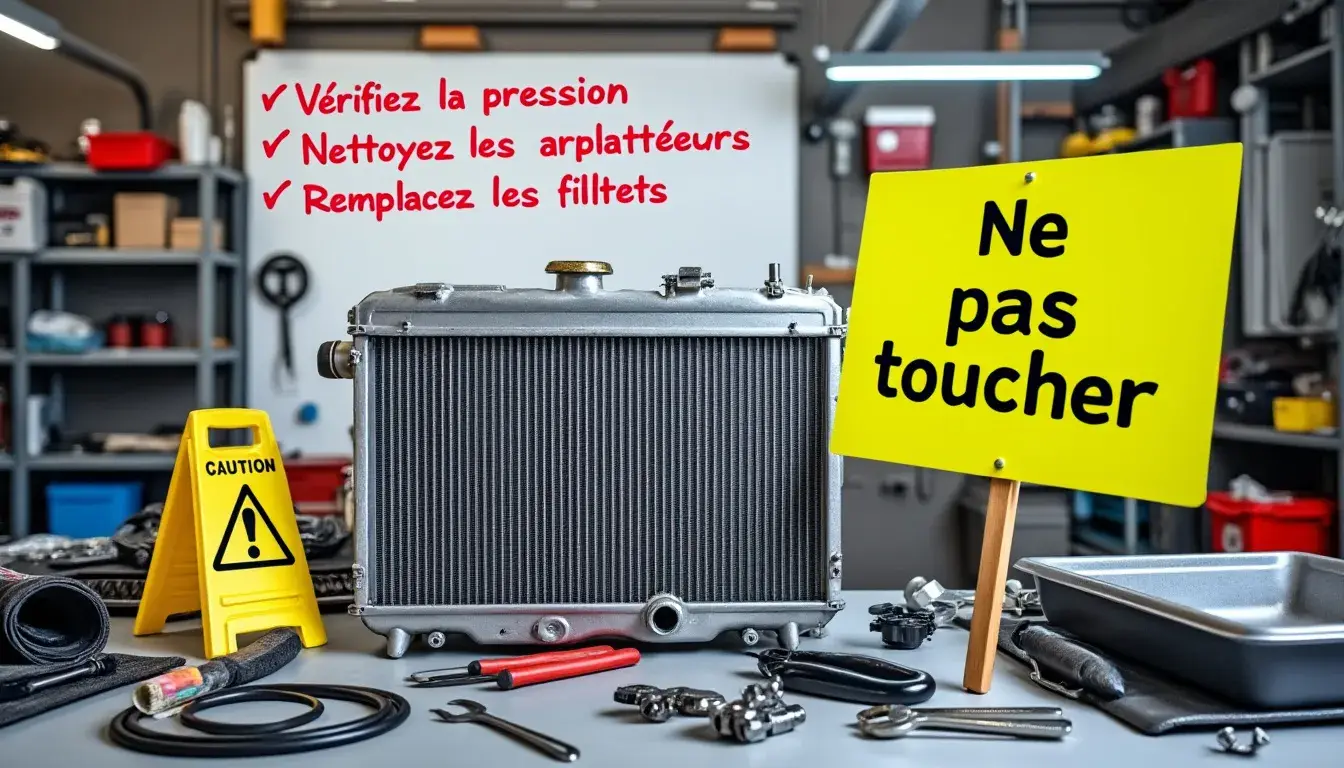
To ensure the proper functioning of your inertia radiator, regular maintenance is essential. This not only helps to prolong the device's lifespan but also optimizes its efficiency.
Simple actions to extend the radiator's lifespan
Regularly clean the radiator's surface to avoid dust accumulation.
Ensure there are no obstructions from furniture or objects that could limit airflow.
For fluid inertia models, periodically check for liquid leaks.
Signs that it's time to replace or repair the device
In some cases, it may be necessary to consider replacing your radiator:
If the device takes longer to heat or does not maintain the desired temperature.
Unusual noises such as hissing or creaking may indicate an internal issue.
For fluid inertia models, liquid leaks or a digital screen that stops responding are warning signs.
FAQ
What is the difference between a dry inertia radiator and a fluid inertia radiator?
Dry inertia radiators store heat in solid materials, while fluid inertia ones use a heat transfer liquid. The former offer greater thermal inertia, while the latter heat up more quickly.
How do I calculate the necessary power to heat my room?
Generally, it is recommended to count about 100 W per m² for a well-insulated room. For example, for a 20 m² room, a 2000 W radiator is adequate.
Are inertia radiators more economical than conventional radiators?
Yes, in the long term, due to their ability to retain heat longer and limit the cycles of ignition. However, their initial cost may be higher.
Can an inertia radiator be programmed?
Most modern models are equipped with programming functions, allowing you to regulate the temperature based on your lifestyle habits.
Are inertia radiators suitable for heating large rooms?
Yes, provided you choose a model with adequate power (1500 to 2000 W) and with effective heat diffusion technologies.