Pellet condensing boiler double performance: energy savings at your fingertips
5 min read
In the face of an ever-evolving energy landscape, the search for more efficient and sustainable heating alternatives has become a major concern for many households. The pellet condensing boiler stands out as an innovative solution, combining thermal performance and substantial savings. In 2025, as energy efficiency is at the heart of ecological transition policies, this equipment distinguishes itself not only by its high yield but also by its ability to reduce its carbon footprint. In this article, we will examine in detail the principles of operation of pellet condensing boilers, their advantages, and the criteria to consider when making the most informed choice.
Understanding the operation of a pellet condensing boiler
To fully appreciate the advantages of a pellet condensing boiler, it is essential to understand its mode of operation. This type of boiler is distinguished by its ability to recover the heat contained in the combustion gases, a process that allows it to achieve superior efficiency.
The principle of combustion and heat exchange
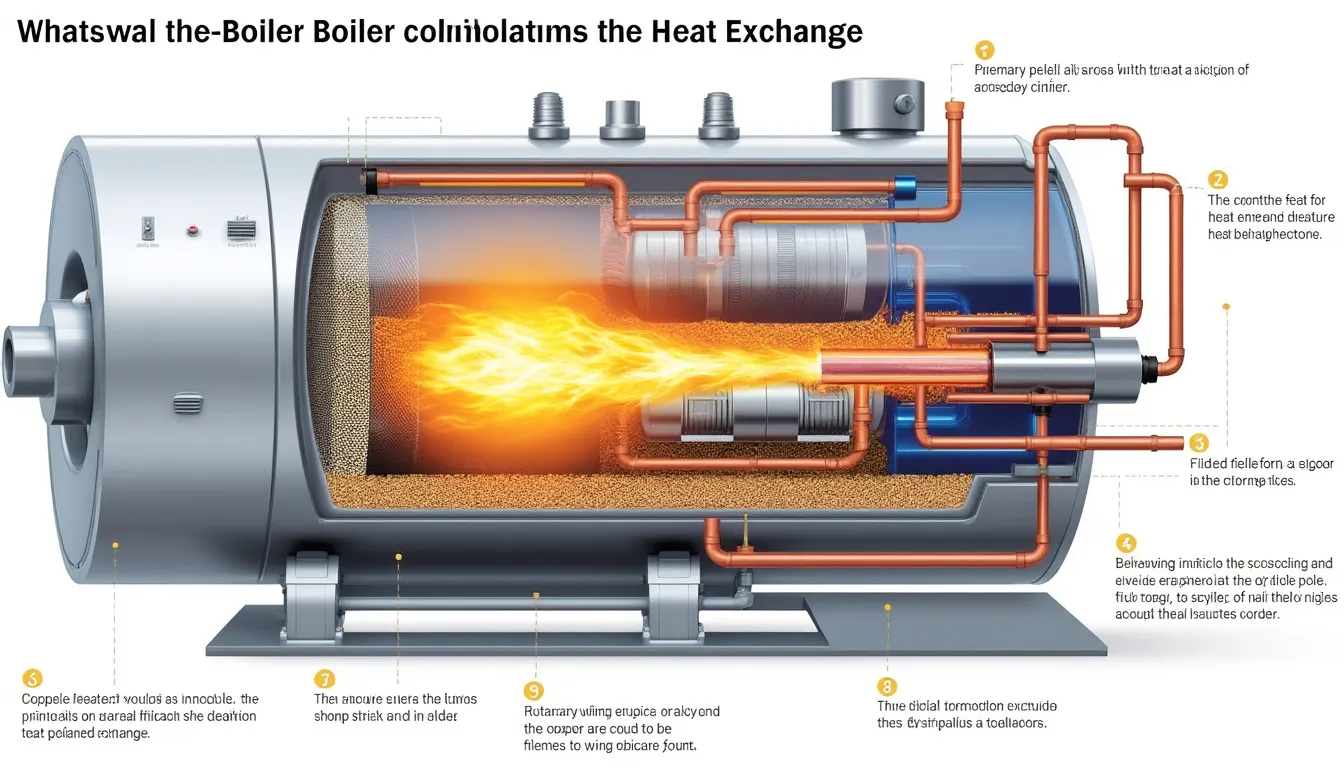
The boiler begins by burning wood pellets, producing heat. This combustion generates fumes composed mainly of water vapor and carbon dioxide. The heating process occurs in two stages:
Combustion: The pellets are mixed with oxygen and burned to produce heat.
Heat exchange: The hot fumes pass through heat exchangers that transfer their heat to the water circulating in the heating system.
Condensation: a major asset
The real innovation lies in the principle of condensation. The condensing boiler uses the latent heat of water vapor present in the fumes. To recover this heat, the fumes are cooled to below 47°C, the temperature at which the vapor condenses and releases even more heat into the system. This increases the boiler's efficiency by approximately 6% compared to a conventional model.
Drainage of condensates
Once the heat has been recovered, the resulting water from condensation is drained into the wastewater network. This process is crucial to ensure optimal and safe operation of the boiler.
The economic advantages of pellet condensing boilers
Pellet condensing boilers offer significant long-term savings, both in energy and economic terms. Looking at the figures, we find that a condensing boiler can reduce energy consumption by up to 40% compared to a traditional boiler.
Significant savings on energy bills
For an average household, the savings can amount to:
496 euros per year for gas condensing boilers.
736 euros per year for oil condensing boilers.
Considering the purchase cost of a pellet condensing boiler, which is approximately 1,500 to 2,500 € more than a conventional model, this extra cost can be amortized in four years.
Quick amortization and profitability
Beyond savings, these boilers guarantee an interesting return on investment, especially during periods of sharp increases in energy prices. It then becomes crucial to evaluate the total cost of ownership when acquiring a boiler.
Type of boiler | Annual savings (in euros) | Additional purchase cost | Amortization period |
|---|---|---|---|
Gas boiler | 496 | 1,500 - 2,500 | 4 years |
Oil boiler | 736 | 1,500 - 2,500 | 4 years |
Technical solutions to optimize the efficiency of pellet boilers
To maximize the performance of a pellet condensing boiler, various technical systems can be implemented. The condensation systems can be internal or external, and their effectiveness also depends on the configuration of the heat emitters in the building.
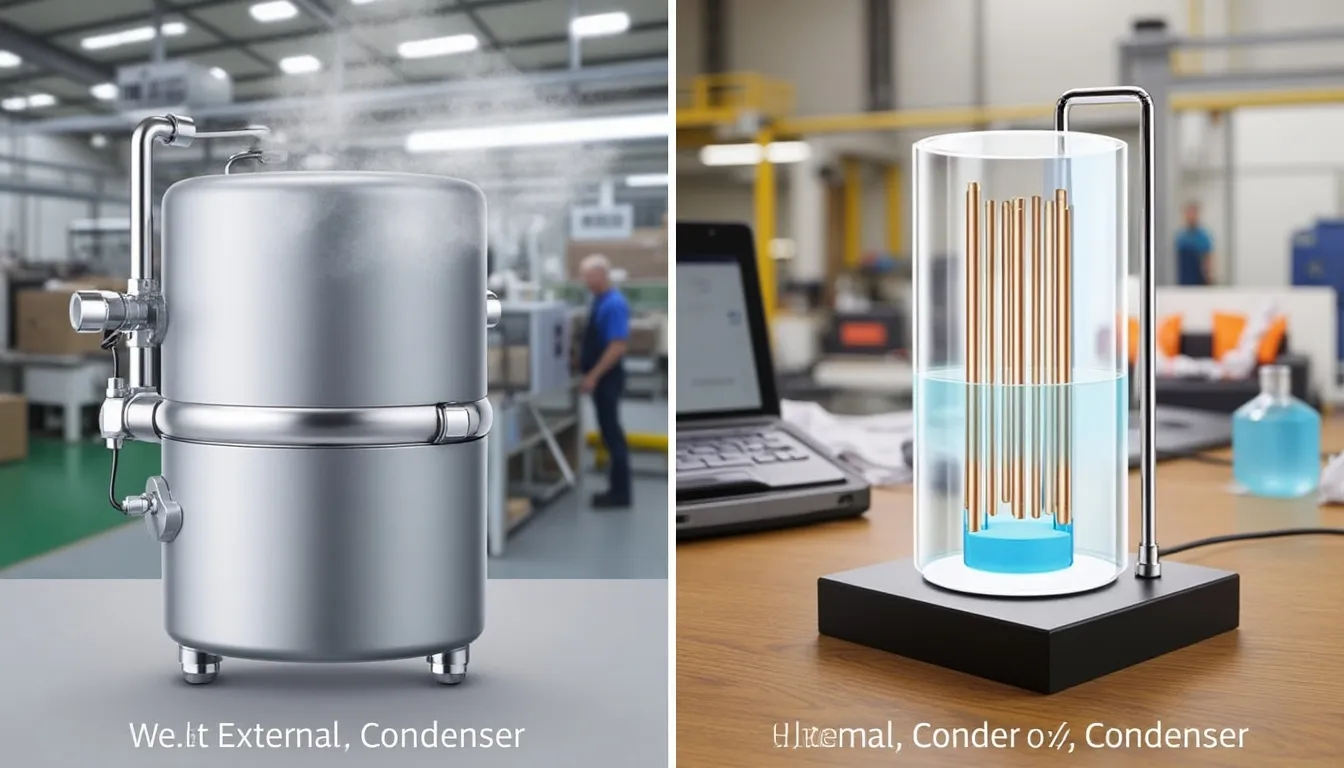
External vs internal condenser
There are two main approaches to integrating condensation:
External condenser: This device is added to traditional boilers. It allows extending the path of the fumes to optimize their cooling.
Internal condensation: Available on newer models, the stainless steel internal exchanger offers easier cleaning and better performance.
The choice of heat emitters
To ensure a return of water at low temperature, thus favoring condensation, it is advisable to install suitable emitters. Underfloor heating represents the ideal option, while high-temperature radiators may be justified in energy renovation cases.
Necessary conditions for optimal condensation
To maximize the efficiency of your boiler, several criteria must be taken into account:
Emit heat at low temperatures.
Facilitate the thermal inertia of construction materials.
Installation and maintenance of a pellet condensing boiler
Installing a pellet condensing boiler is not significantly different from that of a conventional boiler in terms of process, although it is essential to follow certain technical specifics.
The installation steps
The installation of a pellet condensing boiler involves:
Choosing a stainless steel flue pipe to avoid corrosion.
Connecting to the water network to ensure the flushing of heat exchangers and the drainage of condensates.
Installing a lift pump if gravity drainage is not possible.
Regular and professional maintenance
Like traditional boilers, maintenance is essential. It is divided into two parts:
The user must empty the ashtray at regular intervals, usually every two months.
A professional should intervene annually for a full inspection and thorough cleaning of the boiler.
Maintenance criteria | Frequency | Cost |
|---|---|---|
Empty the ashtray | 2 months | Charged to the user |
Professional inspection | Once a year | About 250 € |
Environmental impacts of pellet condensing boilers
Pellet boilers are known for their favorable carbon footprint, significantly reducing carbon dioxide emissions compared to oil or gas boilers.
CO2 emissions and other pollutants
These boilers help limit harmful emissions, with emissions around 30 g of CO2 per kWh, well below the values of conventional boilers. Furthermore, condensing boilers trap some pollutants thanks to the condensates.
Comparative table of emissions
Model | CO2 (mg/Nm³) | COV (mg/Nm³) | NOx (mg/Nm³) | Particles (mg/Nm³) |
|---|---|---|---|---|
ÖkoFEN 16 kW Classic | 12 | 1 | 127 | 9 |
ÖkoFEN 16 kW Condensing | 10 | 1 | 136 | 10 |
FAQ about pellet condensing boilers
What is the cost of a pellet condensing boiler?
The price of a pellet condensing boiler ranges between 1,500 and 2,500 € more than a conventional model.
What subsidies are available for installation?
Energy renovation work can benefit from subsidies, such as the energy bonus when acquiring a pellet boiler.
What is the lifespan of a pellet condensing boiler?
In general, a pellet boiler can last between 15 and 20 years with regular maintenance.
Is it possible to install this type of boiler in an old house?
Yes, but it is important to ensure that the heating system and insulation are adapted to optimize its efficiency.
What maintenance does a pellet condensing boiler require?
Regular maintenance is required, notably cleaning the ashtray and an annual check by a professional, costing around 250 €.